
Do You Need Garden Drainage Before a New Patio or Artificial Grass in South East London?

If you are planning a garden update and asking about garden drainage before patio or artificial grass, you are asking the right question. A new surface can transform how your garden looks and feels, but it will not solve poor water movement underneath. In many cases, the long-term performance of a patio or artificial lawn depends on the groundwork, levels and drainage being handled properly first.
At Capital Paving and Landscapes, we help homeowners in Catford, Bromley, Forest Hill, SE6 and nearby parts of London plan patios, artificial grass and wider landscaping from the ground up. This guide explains when drainage should come before installation, what warning signs to look for, and how to avoid costly problems after the job is finished.
Do you need garden drainage before patio or artificial grass?
Often, yes. If your garden already puddles, stays boggy after rain, or slopes towards the house, laying a new surface over the top can lock the problem in rather than fix it. A patio or artificial grass area needs a stable base and a clear plan for where water will go.
That does not always mean a large drainage system. Sometimes the solution is correcting levels, improving the sub-base, or adding discreet drainage as part of the installation. The key is to assess the site before materials are laid, not after the finished surface starts showing signs of trouble.
Why garden drainage before patio or artificial grass matters
1. It protects the new surface
Standing water and saturated ground can undermine even the most attractive finish. With patios, that can mean movement, loose pointing, slippery patches and an area that takes too long to dry out. With artificial grass, it can leave the lawn feeling spongy, damp and less pleasant to use.
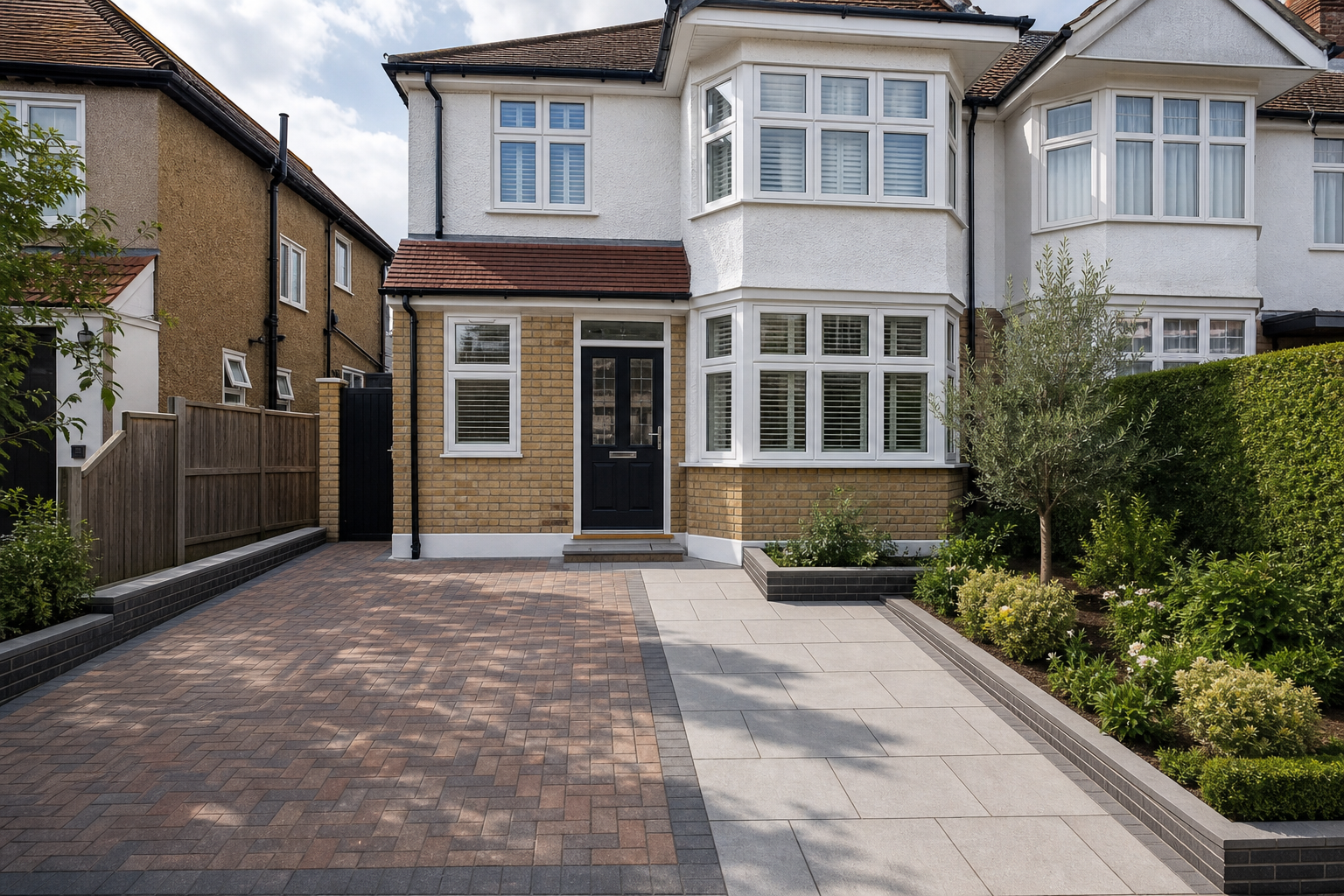
If you are investing in patio installation and paving services, it makes sense to protect that investment by getting the groundwork right from the start.
2. It helps keep water away from the property
Good garden drainage is not just about the surface itself. It is also about managing how water moves across the whole area. If levels are wrong, rainwater can travel towards walls, doors or low points where it should not sit.
Before a new patio or artificial lawn goes in, we look at how the garden currently behaves in wet weather so the finished project works with the site rather than against it.
3. It improves day-to-day use
A garden should be usable, not something you avoid after heavy rain. Proper drainage planning helps outdoor spaces dry more evenly, feel firmer underfoot and stay easier to maintain. That matters whether you want a clean entertaining space, a lower-maintenance lawn alternative or a full garden makeover.
Signs your garden may need drainage before installation
Not sure whether drainage is an issue? These are some of the most common warning signs we see during site visits:
Puddles that remain long after rain has stopped
Soft, muddy or waterlogged patches underfoot
Grass that struggles because the ground stays saturated
Water running towards the house, steps or door thresholds
Existing paving that feels slippery or never seems to dry properly
Low spots where rainwater naturally collects
A garden that is difficult to use for days after wet weather
If any of these sound familiar, it is worth getting the area checked before choosing surface materials. Retrofitting drainage after a patio or artificial lawn has been laid is usually more disruptive than dealing with it during the build.
Patio drainage: what should be checked before paving starts
A new patio is only as good as the preparation beneath it. Before we lay paving, we assess how water will behave once the area becomes a hard surface. That includes both the visible finish and the hidden layers underneath.
Levels and fall
Patios normally need a suitable fall so water can move away rather than sit on the surface. Small errors in levels can lead to large puddles once the paving is complete, especially on wider areas.
Sub-base and ground conditions
If the ground is already weak or saturated, the sub-base has to be prepared properly. Simply laying slabs over poor conditions does not remove the underlying problem. It can shorten the life of the installation and affect the finished look.
Edges, thresholds and drainage routes
Water needs somewhere sensible to go. Depending on the layout, that may involve reshaping the area, allowing for drainage channels, or planning how runoff is managed within the garden. The right approach depends on the size of the patio, surrounding levels and existing surfaces.
When clients book garden drainage and hard landscaping in London with us, we consider the whole space rather than treating paving as a stand-alone job.
Artificial grass drainage: what people often miss
One of the biggest misconceptions about artificial grass is that the grass product alone solves drainage. In reality, the surface may allow water through, but the layers beneath still need to cope with that water properly.
The base matters as much as the grass
If the ground below is compacted, uneven or already holding water, artificial grass can end up sitting over a problem rather than solving it. A well-prepared, free-draining base is essential if you want the finished lawn to feel firm and perform well in wet conditions.
Low spots still cause trouble
Even with a quality artificial lawn, low points in the garden can collect water. That can leave the area damp for longer, reduce comfort underfoot and create frustration for homeowners who expected a cleaner, drier surface.
Drainage should be planned before installation
When we assess an area for artificial grass and garden landscaping, we look beyond the surface finish. We consider the existing levels, the condition of the soil, surrounding hard landscaping and whether the area needs drainage improvements before the lawn goes down.
Can drainage be built into the same project?
Yes, and that is often the most practical route. If you already know you want a new patio, artificial grass or a wider garden makeover, dealing with drainage as part of the same project is usually more efficient than coming back to it later.
Depending on the site, the solution may include one or more of the following:
Reshaping levels so water moves more naturally
Improving the prepared base beneath the new surface
Creating a clear drainage route within the garden
Adding discreet drainage features where suitable
Combining drainage work with patio, turf or hard landscaping installation
The right answer always depends on the garden. That is why an on-site assessment matters more than guesswork.
Why early drainage advice saves money
Many drainage problems become expensive because they are only discovered after the visible part of the job is complete. Looking at the site first can save time, disruption and repeat costs.
You avoid lifting new work later. If a patio or artificial lawn has to be taken up to correct water issues, the final bill is rarely smaller the second time around.
You protect the finish. Good groundwork helps the surface look better for longer.
You plan the whole garden properly. Drainage, paving, turf and access all affect one another, so it makes sense to design them together.
You get clearer advice. A site visit lets us recommend what is actually needed for your garden, rather than overspecifying or overlooking a simple fix.
Why homeowners in South East London ask us to assess drainage first
Capital Paving and Landscapes is a family-run business based in London, SE6 4TA. We bring more than 15 years of experience to patios, artificial grass, paving, fencing and landscaping projects, and we also offer garden drainage as part of our service range.
We are a Construction Skills Certification Scheme accredited business, and we hold an NVQ Level 3 in Site Carpentry awarded by City and Guilds of London Institute. For homeowners, that means you are dealing with an established team that values proper preparation as much as the finished appearance.
Our recent customer reviews frequently mention that we are hardworking, punctual, professional and tidy on site. If you are planning work in Catford, Bromley, Forest Hill, SE6, Keston or nearby areas, we can assess the ground conditions and advise on the best next step for the space you have.
We are also available seven days a week from 08:00 to 20:00, making it easier to arrange a convenient, free, no-obligation site visit.
FAQs about garden drainage before patio or artificial grass
Do I always need drainage before artificial grass?
No. Some gardens already have suitable levels and a base that can be prepared without major drainage work. However, if the area is frequently boggy, holds standing water or has obvious low spots, it is wise to assess drainage before installation.
Can you install a patio on a waterlogged garden?
A patio can be installed on challenging ground, but the drainage and groundwork need to be addressed properly first. Laying slabs over wet, unstable conditions without a plan is likely to create problems later.
What is the biggest drainage mistake before laying a patio?
One of the biggest mistakes is focusing only on the paving choice and not on the levels and water runoff. Even quality materials can underperform if rainwater has nowhere to go.
Do you offer garden drainage, patios and artificial grass in Catford and Bromley?
Yes. We are based in London SE6 4TA and serve areas including Catford, Bromley, Forest Hill, SE6 and Keston. If you are planning a new patio, artificial grass or a broader landscaping project, we can arrange a free, no-obligation site visit.
Conclusion
If you are wondering whether you need garden drainage before a new patio or artificial grass, the safest answer is to assess the site before the build starts. A new surface may improve the look of the garden, but only the right preparation will help it perform properly through wet weather.
At Capital Paving and Landscapes, we take a practical, honest approach. We will look at the levels, the ground conditions and the overall layout, then recommend the most suitable way forward for your garden.
Book a free, no-obligation site visit today to discuss garden drainage, patios or artificial grass installation in London and the surrounding areas. We can help you plan the groundwork properly before the finished surface goes in.
Comments